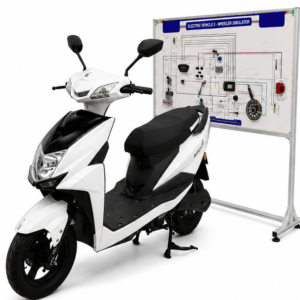

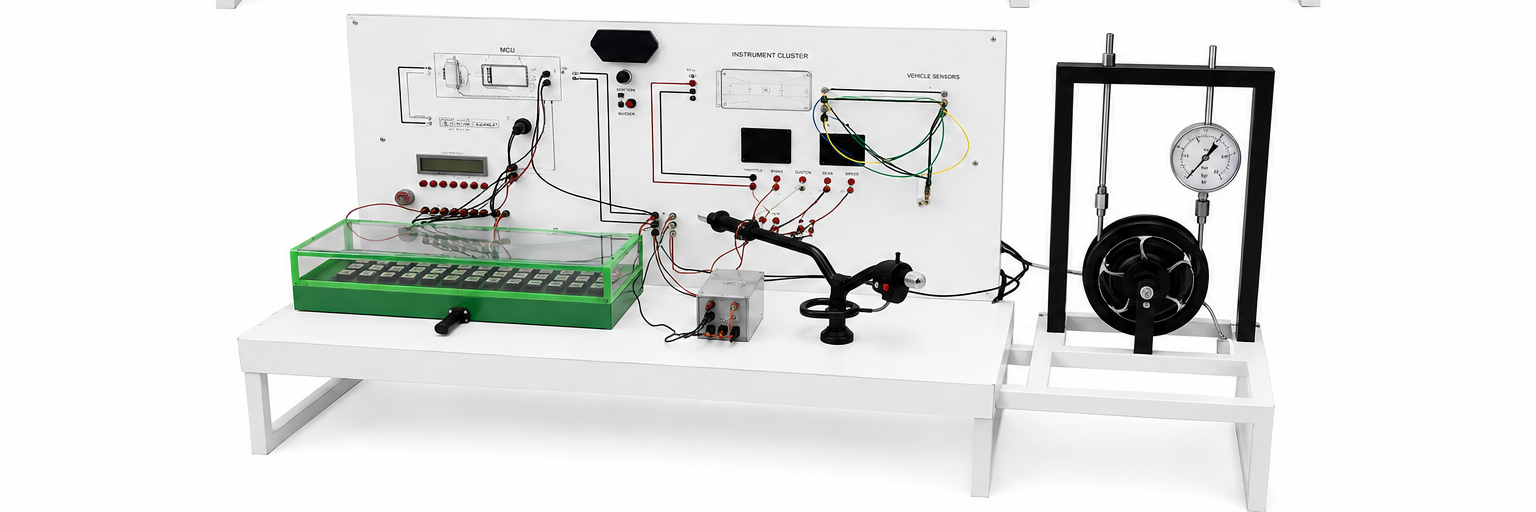
2 Wheeler HIL EV Test Rig with variable load (Manual)
Price on request
Request a quote 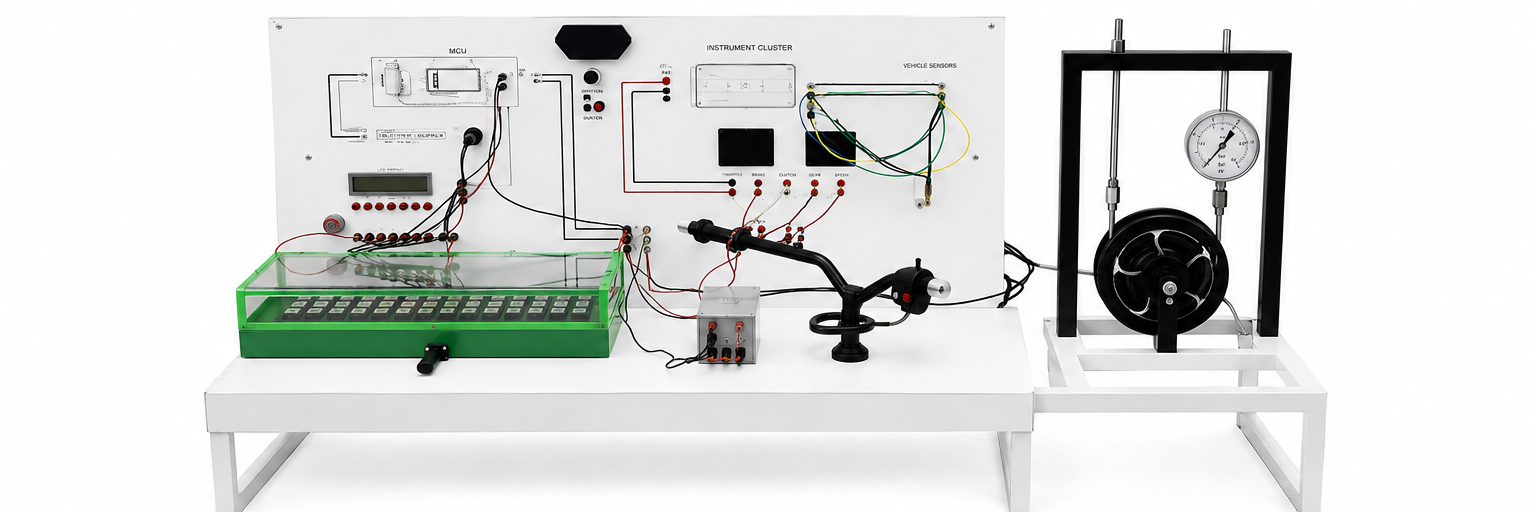
| Discipline | Automobile, Electrical, Mechanical |
|---|---|
| Power Rating | 1 kW |
| Control Type | Computerized |
| Load Capacity | 1 kN |
| Power Supply | 230 V AC 1 Phase |
| Frame Material | Mild Steel |
| Automation Grade | Semi Automatic |
| Application | Training Center, QA Lab, Engineering College, Polytechnic, Industrial Lab, ITI, Research Lab |
| Data Rate | 125 kbps, 250 kbps, 500 kbps, 1 Mbps (configurable) |
| Physical Layer | ISO 11898-2 (High-Speed CAN) |
| Message Format | Standard (11-bit ID) / Extended (29-bit ID) |
| Supported Parameters | Cell Voltage, Cell Temperature, SOC, SOH, Current, Fault Codes |
This protocol is widely used in EV research, development, testing, and training laboratories to enable monitoring, control, and diagnostics of the battery system.
Key Features